Add Row
Add Element
cropper
update
Gulf Of America Luxury Living
update
Add Element
  • Home
  • Categories
    • luxury
    • homes
    • lifestyles
    • design
    • travel
    • events
    • boating
    • national parks
    • food
    • wildlife
    • Entertainment
    • boating
    • Politics
    • sharks
May 13.2025
3 Minutes Read

Nebraska's Don Bacon Defies Party Line on Gulf of America Bill

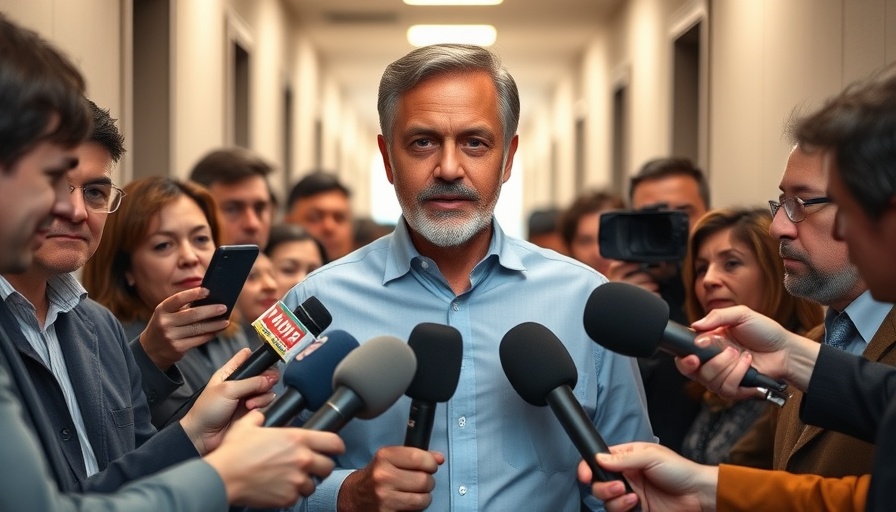
Middle-aged man discusses Gulf of America bill with journalists.

Don Bacon's Unique Stance in a Divisive Vote

In a dramatic display of lone opposition, Nebraska's U.S. Representative Don Bacon recently voted against a controversial bill aimed at renaming the Gulf of Mexico to the Gulf of America. His dissent stood out in a Republican-led House that passed the legislation by a narrow margin of 211-206. The bill, introduced by Georgia Republican Marjorie Taylor Greene, aims to codify a previously signed executive order by then-President Donald Trump, focusing on a name change that some see as a matter of national pride. However, Bacon contends that there are “more important issues” the U.S. should focus on.

The Legislation's Journey and Implications

The passing of the bill marks a significant yet contentious moment in U.S. legislative history. Greene pushed forward the changes that would mandate any official document to reflect the new name, suggesting the need for a reinforced American identity in coastal narratives. Nonetheless, Bacon's position isn't just a tick on a legislative scorecard, but rather a prompt for deeper contemplation regarding governmental priorities. He criticized the symbolic focus on renaming the Gulf as a misallocation of time and resources amidst pressing societal issues like healthcare reform and economic instability.

Republican Support: Divided Opinions

Despite Bacon's singular vote against the bill, many Republicans expressed their backing, framing the renaming as a recognition of America’s influence over the Gulf. Some party members believe that the change will solidify a sense of ownership and could foster patriotism. Notably, House Rules Committee Chairwoman Virginia Foxx defended the bill during a hearing, stating it highlighted the strategic importance of America’s geographic influence. Yet, critics, including Florida Rep. Maxwell Frost, countered this narrative by emphasizing pressing domestic challenges like rising prices and economic distress that overshadow such symbolic gestures.

Contextualizing the Opposition

What sets Bacon apart from his Republican colleagues is not merely his opposition to a name change but his focus on the greater American agenda. He pointed out that while the administration makes considerable strides in areas like border security and waste reduction in government, real-life implications for average Americans must take precedence in legislative discussions. This brings forth the age-old debate in politics regarding symbolic actions versus substantive policy changes, igniting a necessary dialogue about governmental responsibilities in challenging times.

The Broader Conversation on National Identity

The bill presents an opportunity to explore broader themes surrounding national identity and the use of symbolism in political action. While proponents argue that renaming could solidify America’s ownership, opponents question the practicality and necessity of such initiatives amid competing priorities. This name change might stir feelings of nationalism for some, but the underlying issues affecting communities might make those feelings less relevant for many citizens. Understanding where to channel energy, resources, and legislative efforts is central to a Congress that intends to represent diverse constituencies.

As the Gulf of America bill makes its way to the Senate, the conversation will likely continue to fluctuate between symbolic representation and real political change. Bacon encapsulates a pivotal perspective that may resonate with constituents who prioritize tangible improvements over ideological symbols. While support for the renaming persists, the vital question remains: what should Congress's focus be in a time rife with pressing issues?

Politics

1 Views

0 Comments

Write A Comment

*
*
Related Posts All Posts
12.12.2025

Big Beautiful Gulf Lease Sale: $279.4 Million Invested in Future Energy

Update The Latest US Gulf Lease Sale: A Glimpse into Future Energy Prospects On December 10, 2025, the US Gulf of Mexico hosted a pivotal lease sale, marking its first encounter in two years. Dubbed the Big Beautiful Gulf 1 (BBG1), this event attracted the attention of thirty companies eager to explore the potential of federal waters. Impressively, these companies submitted a total of $371.9 million in offers, with $279.4 million classified as apparent high bids. The Bureau of Ocean Energy Management (BOEM) reported the statistics, confirming that the day was a success despite the bidders often looking toward the depths for their next adventure. Deepwater Desires: Where the Money Flowed One striking takeaway from BBG1 is the overwhelming preference for deepwater blocks. Out of the substantial 15,156 available blocks covering approximately 80 million acres, only 181 received bids. Oil giants like BP emerged as the apparent high bidder for fifty blocks, offering $61 million. Following closely were Woodside Energy and Chevron, with high bids of $38.1 million and $33 million, respectively. As companies like Chevron pushed for the highest individual bid at $18.6 million for the Keathley Canyon Block 25, it became clear that the allure of deepwater drilling persists even in a fluctuating economy. The Economics of Offshore Energy: Royalty Rates and Future Sales The economic framework of this sale is equally noteworthy. To encourage participation, BOEM reduced the royalty rate to 12.5%, a historical low for deepwater leases since 2007. This strategy aims to invigorate investor interest and foster a sustainable path for offshore energy development. As Laura Robbins, BOEM's acting regional director, stated during a press conference, a schedule of expected sales every March and August over the next 15 years offers a level of certainty the industry hasn't seen in recent times. The potential for future leases breeds optimism in the market, promising ongoing interest in oil exploration in the Gulf. A Shift Towards Sustainable Development The context of the lease sale is also instructive when viewing it against the backdrop of environmental considerations. Industry representatives, including Erik Milito from the National Ocean Industries Association, hailed BBG1 as a milestone not just for profits but also as a step towards enhancing America's energy independence. However, with the mounting concerns about climate change, balancing economic growth with environmental protection will be crucial. The Broader Impact of Offshore Oil Production The Gulf of Mexico has long been integral to the United States energy strategy, accounting for about 15% of the nation's crude oil output and housing an estimated 29.6 billion barrels of technically recoverable oil and 54.8 trillion cubic feet of natural gas. As the US continues to navigate its energy landscape, these lease sales play a significant role in shaping future production and consumption. With BBG1 being the 136th federal offshore oil and gas lease sale, it signifies a re-opening of doors previously closed due to regulatory shifts. The market's performance and ongoing lease schedules reflect a resurgence in confidence in offshore investments. What This Means for the Future As we look ahead, the dynamics of the Gulf region are set to evolve through mandated sales under the One Big Beautiful Bill Act. For the energy sector, the focus must remain on sustainable and responsible drilling practices while nurturing profitable ventures. For consumers and investors alike, understanding these shifts will be vital to anticipating future energy prices and policies. After unveiling such significant bids, stakeholders must stay informed and engaged with upcoming lease sales and regulatory changes that will undoubtedly influence energy markets for years to come. Companies, policymakers, and the public must collaborate towards fostering a balanced energy future, ensuring economic benefit aligns seamlessly with environmental stewardship.

12.11.2025

Gulf of America Lease Sale Marks New Era in U.S. Energy Production

Update New Era in Gulf Energy Production Begins The recent auction of oil and gas drilling rights in the Gulf of America has set the stage for a reinvigoration of domestic energy production. Held in New Orleans, this auction marks the first sale since 2023, and it signals the Trump administration's commitment to ramping up energy development in federal waters. The Bureau of Ocean Energy Management (BOEM) reported that 26 companies submitted a total of 219 bids for over 1.02 million acres of oil and gas leases, representing merely 1.3% of the total available acreage. This lease sale, branded as "Big Beautiful Gulf 1," is the first of 30 mandated sales designed to enhance U.S. energy independence and economic growth through domestic resource development. Financial Overview: What the Numbers Say The sale generated approximately $279 million in high bids. While this number is lower than the $382 million raised in the December 2023 auction—a record for offshore leases—companies bid more per acre than in any sale since 2017. This shift suggests growing confidence among energy companies in the Gulf's untapped potential, particularly in familiar hotspots such as the Mississippi and Keathley Canyons. Continued Investment in Offshore Resources Major firms like Chevron USA and BP secured significant tracts during the auction, reflecting a unified push towards maximizing America’s energy resources. Chevron placed the highest bid at $18.6 million for a block in the Keathley Canyon, indicating a focused commitment to leveraging long-standing production areas renowned for their prolific oil fields. The American Petroleum Institute (API) praised the renewed auction process, viewing it as a vital step toward establishing a predictable framework for long-term investment in energy production, which has historically provided 14% of the total U.S. crude oil and 2% of natural gas outputs from offshore sources. Regulatory Changes and Industry Response The recent auction highlighted a shift in fiscal policy, as the royalty rates for oil companies dropped to 12.5% under the Trump administration compared to the 18.75% established under Biden. This reduction is expected to stimulate growth and incentivize companies to invest heavily in offshore drilling. Environmental advocates, however, remain cautiously critical, citing concerns over the ecological implications of expanded drilling in the Gulf. Nevertheless, proponents argue that the Gulf produces some of the lowest carbon intensity barrels, balancing the need for energy with environmental stewardship. Future of Gulf Energy Production Looking ahead, the implementation of 30 scheduled lease sales over the next 15 years under the One Big Beautiful Bill Act suggests a long-term commitment to offshore energy exploitation. Industry officials assert that expanding U.S. offshore capabilities not only safeguards jobs but reinforces America's role as a leading player in global energy markets. The coming years could be transformative as companies develop advanced technologies for extraction that promise to reduce environmental impacts while maximizing output. As these developments unfold, the Gulf region stands poised as a key contributor to national energy production and economic recovery. For those interested in the energy landscape, staying informed about the developments in Gulf of America energy policies and their implications will be crucial. As the auction exemplifies, the trajectory of energy production will significantly impact both economic and environmental aspects of American life.

12.10.2025

Unlocking Opportunities: NOAA Launches New Cooperative Institute in the Northern Gulf of America

Update Understanding the New Cooperative Institute in the Northern Gulf of America The National Oceanic and Atmospheric Administration (NOAA) has launched an exciting open competition aimed at establishing a new Cooperative Institute focusing on the Northern Gulf of America ecosystem. This initiative resonates with a critical mission: to enhance research, education, and outreach activities tailored to the unique environmental challenges and opportunities of this vital region. Four Key Focus Areas for the Institute The new Cooperative Institute, also known as the Cooperative Institute in the Northern Gulf of America (CINGA), will zero in on four essential areas: Advancing Technology for Environmental Modeling: Enhancing modeling techniques will allow for better predictions and analyses regarding the environmental impact on local ecosystems. Improving Forecasting Capabilities: By developing more accurate forecasting tools, CINGA seeks to tackle weather, oceanic conditions, and hazards associated with environmental variabilities, ultimately aiming to safeguard coastal communities. Promoting Sustainable Development: The focus on sustainable practices ensures that marine and coastal resources are utilized wisely and responsibly. Enhancing Data Stewardship: Increased accessibility to crucial data will allow researchers, policymakers, and local communities to make more informed decisions, fostering resilience across the Gulf ecosystem. Encouraging Participation from Academic Institutions This funding opportunity invites applications from eligible U.S. universities, colleges, and research institutions. The competition is open from December 4, 2025, to February 2, 2026, providing ample time for institutions to prepare their proposals. In creating a collaborative environment, NOAA emphasizes the importance of pooling diverse expertise and resources. By working together, these institutions can contribute to impactful research that addresses the complex challenges faced by the Gulf region. Funding and Collaborative Research Opportunities With a projected budget of between $50 million and $100 million over the five-year period, CINGA represents a substantial investment in marine research. This funding will support collaborative, long-term research involving NOAA scientists and affiliate institutions while addressing issues like the effects of extreme weather events and strategies for adapting to climate change. Researchers will also have the opportunity to involve students in NOAA-related projects, fostering the next generation of environmental scientists. Why This Initiative Matters The establishment of CINGA is more than just a funding opportunity—it’s a strategic move towards fostering resilience and economic vitality in the Gulf of America. Given the region's vulnerability to climate change and natural disasters, this initiative plays a crucial role in empowering communities through scientific research and education. Enhanced forecasting and technological advancements will contribute to better preparedness and adaptability in the face of environmental challenges. As you consider the implications of this program, whether as an academic institution or a community member, remember its potential to create lasting impacts in the Gulf region. Engaging with these opportunities could help pave the way for sustainable development and robust environmental stewardship for years to come.

Terms of Service

Privacy Policy

Core Modal Title

Sorry, no results found

You Might Find These Articles Interesting

T
Please Check Your Email
We Will Be Following Up Shortly
*
*
*