
Add Row
Add Element
cropper
update
Gulf Of America Luxury Living
update
Add Element
  • Home
  • Categories
    • luxury
    • homes
    • lifestyles
    • design
    • travel
    • events
    • boating
    • national parks
    • food
    • wildlife
    • Entertainment
    • boating
    • Politics
    • sharks
May 28.2025
2 Minutes Read

Understanding the Impact of the Strong Earthquake in the Gulf of America

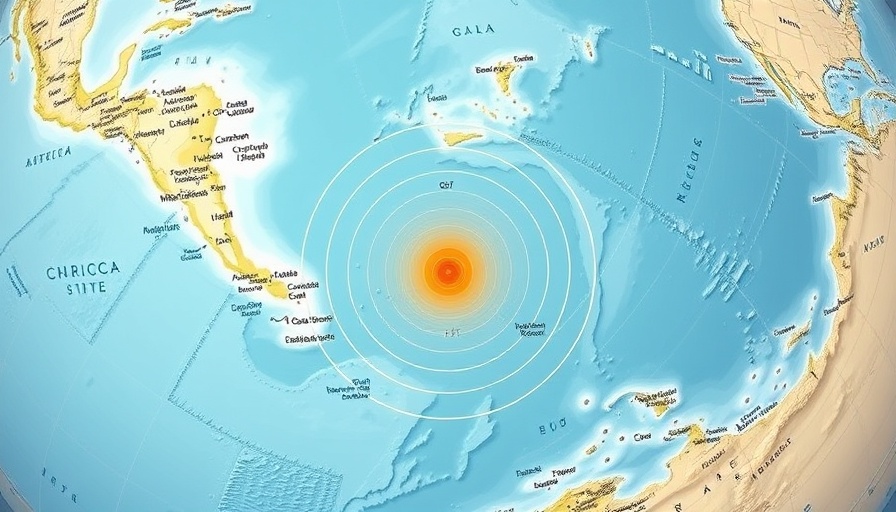
Map showing earthquake impact in Gulf of America.

Shake-Up in the Gulf: Understanding the Recent Earthquake

On May 24, 2025, an unusual seismic event shook the waters of the Gulf of America, registering a magnitude 3.1 earthquake. Occurring at 2:41 PM local time, the quake was centered approximately 70 miles south of Gulf Shores, Alabama, at a depth of 10 km. While not causing significant destruction, this tremor has captured attention due to its rarity in the region.

Why This Earthquake Matters

Earthquakes of this magnitude are not common in the Gulf of America, which had seen no seismic activity for at least three weeks prior. Though a magnitude of 3.1 is considered weak by most standards, it was felt by several coastal residents who reported their experiences through the USGS’s "Did you feel it?" website, illustrating how even minor quakes can draw public interest and concern.

The Science Behind Earthquakes

According to insights from USGS, earthquakes below a magnitude of 2.0 go largely unnoticed by human observers. However, once they exceed this threshold, awareness increases significantly. The distinction becomes clearer with earthquakes of magnitude 5.5 and greater, which typically result in extensive damage and casualties. Since the Gulf quake remained relatively subdued, it did not lead to any tsunami alerts or infrastructure damage, reassuring both local residents and officials.

Cultural and Economic Impact on Coastal Communities

The Gulf Coast is a vital hub for fishing, tourism, and maritime activities. Events such as this may prompt discussions about safety protocols in marine and coastal contexts. For instance, while the earthquake was felt on land, the fishing industry remains a crucial economic force, serving regions from Alabama to Mexico. Fishermen could be concerned about underwater tremors affecting fish behavior, thus impacting their catch rates.

A Broader Look at Earthquakes in the Region

This relatively mild earthquake brings to light the geological characteristics of the Gulf of America. Though earthquakes are infrequent, they serve as a reminder of nature's unpredictability. Coastal residents may wonder how prepared their communities are for potential seismic events in the future, highlighting the importance of emergency preparedness and public awareness campaigns.

Engaging Communities and Creating Conversations

The response to this event is a testament to the resilience of coastal communities. As residents share their experiences, local forums can play a pivotal role in fostering dialogue about geological events, safety measures, and community responses to environmental threats. It’s essential for policymakers and local leaders to engage citizens in these discussions, emphasizing the importance of continuity and precaution in communal life.

Conclusion: What’s Next for Coastal Residents?

Although this earthquake appears to be a minor occurrence, it serves as a stark reminder of the ever-present potential for geological activity even in unexpected regions. Communities must remain observant of their environments, assess their preparedness for future quakes, and consider discussions surrounding safety and emergency response. How will residents and leaders respond to this jolt, ensuring safety and resilience for the vibrant coastal community?

Politics

1 Views

0 Comments

Write A Comment

*
*
Related Posts All Posts
12.22.2025

Why Changing 'Gulf of Mexico' to 'Gulf of America' Matters for History and Tourism

Update A Bold Move: Fort Smith's Map Change Stirs Controversy The Fort Smith National Historic Site in Arkansas has recently become a focal point of debate after altering a map label from "Gulf of Mexico" to "Gulf of America." This decision, linked to an executive order from the previous administration, aims to reinforce a sense of national pride by renaming significant geographical features. However, the abrupt change has drawn attention, leaving visitors and historians grappling with its implications. The Implications of Naming Names carry weight and significance. By referring to the Gulf as "Gulf of America," the change seeks not only to evoke a sense of nationalism but also to reshape historical narratives. This approach aligns with previous actions seen nationwide, such as the removal of historical signs and displays that do not conform to current political narratives, often leading to pushback from various factions. Much like the controversies surrounding the removal of flags and monuments, this map alteration underscores a growing trend wherein the manipulation of public symbols serves political interests, making history a battlefield of ideologies. Visitor Reactions: Engaging with History Visitor reactions to the map change have been mixed. Some express outrage, viewing it as an unnecessary alteration that erases history. Others feel it embellishes narrative ownership over American geographical spaces. Some tourists, eager to document the situation, are participating in the Data Rescue Project's initiative to preserve the signage and catalog alterations, ensuring that every shift in historical interpretation is recorded for future generations. The Tourism Impact Tourism is vital to Fort Smith's economy, bringing in hundreds of thousands of visitors annually. Local officials note that these changes could influence the duration and nature of tourism in the area. As the city navigates these changes, citizens are reminded of the valuable revenue brought by historical sites such as Fort Smith National Historic Site, which is free to visit. However, if the perceived authenticity of these sites continues to wane, tourists may seek their experiences elsewhere. Moving Forward: The Need for Balanced Narratives As the conversation around the naming of geographical landmarks evolves, the challenge remains to balance nationalistic sentiments with historical integrity. Visitors, historians, and park services must work collaboratively to ensure that the rich tapestry of America's history is respected and preserved. This conversation borders on the need for transparency and public involvement in additions or changes to historical narratives. Involving community voices may mitigate backlash and create a more inclusive atmosphere for all views, preserving the deep cultural significance these landmarks embody. Conclusion: Voices of Concern and Action The recent changes at the Fort Smith National Historic Site reflect a broader trend within national parks and historic sites across the country. As these institutions navigate the political landscape, it is crucial for audiences to engage in discussions about the implications of historical alterations. Their voices matter, and actions can ensure a history that accurately represents diverse viewpoints. Whether through visiting, documenting, or advocating for transparency, all individuals play a role in shaping how history is told.

12.20.2025

Senator Wyden Probes Major Shipping Firms on Cartel-Linked Fuel Smuggling

Update Understanding the Scope of Fuel Smuggling In a move that could significantly impact the maritime shipping industry, U.S. Senator Ron Wyden has initiated an inquiry into fuel smuggling operations linked to major Mexican cartels. Fuel smuggling between the U.S. and Mexico has surged to alarming levels, second only to drug trafficking as a source of revenue for organized crime. According to the U.S. Treasury, Mexican cartels have increasingly infiltrated the vast energy sector of North America, establishing sophisticated networks to facilitate the illicit transportation of hydrocarbons. Senator Wyden's Investigative Actions Wyden, the top Democrat on the Senate Finance Committee, has sent letters to seven key shipping companies, including Torm, Frontline, and Teekay, requesting detailed information about their vetting processes to prevent their tanks from being used to transport illegal fuels. He expressed a clear commitment to ensuring all entities involved in the energy sector are adequately scrutinizing their operations. As Wyden stated, "I want to be sure both shipping companies and the U.S. Government are doing everything in their power to shut off this revenue stream." His letters reference an extensive investigation by Reuters that tracked how these cartels exploit loopholes in regulations. The Cartel Connection and Its Financial Implications The Jalisco New Generation Cartel (CJNG) is reportedly at the helm of these operations, which have seen them transform the smuggling of fuel into a lucrative business. Cartels have reportedly saved millions by declaring illegal fuel shipments as other types of petroleum products exempt from import taxes, effectively dodging significant levies of up to 50% of cargo value. This growing threat has even led to bootleg imports accounting for one-third of the diesel and gasoline market in Mexico. The Role of Maritime Companies in Combating Illicit Activities Companies like CMB.Tech and Norden have confirmed their compliance with industry regulations, alleging that they conduct thorough due diligence. With the Senator's inquiry, the pressure is on these shipping giants to step up their safeguards and transparency practices. The balance of legal trade and potential cartel involvement presents a challenging dilemma for the maritime industry that necessitates enhanced vigilance and international cooperation. The Global Context of Fuel Smuggling Fuel smuggling is not simply a local issue; it resonates within wider international efforts to regulate trade and combat organized crime. The global energy market is intricately intertwined with criminal networks that undermine both economies and public safety. As law enforcement agencies work to dismantle these operations, the cooperation of businesses becomes critically important. What’s Next for Shipping Companies? As these letters set the stage for a potential overhaul of safety measures in the shipping industry, all eyes will be on how these firms respond. The call for more rigorous vetting processes could alter logistical frameworks and reshape regulatory practices in the shipping industry moving forward. These developments serve as a stark reminder of the intricate relationship between legal business operations and illicit trade. The steps taken now could define the future landscape of maritime commerce and its accountability in the face of evolving criminal activities.

12.17.2025

Shell's Bold Investment in Kaikias Waterflood Project Transforms Oil Production in Gulf

Update Shell's Strategic Investment at Kaikias: A Game Changer for Gulf Oil Recovery In a significant move that echoes its commitment to sustainable energy production, Shell Offshore Inc. has made a final investment decision (FID) on a waterflood project at its Kaikias field in the U.S. Gulf of America. This initiative, set to commence with the first water injection in 2028, aims to enhance oil recovery by displacing additional oil in the reservoir, extending the production lifecycle of the Ursa platform by several years. The Technical Insights Behind Waterflooding Waterflooding is a secondary recovery method where water is injected into the reservoir to help push oil towards production wells. This technique not only replenishes pressure within the oil formation but also maximizes the extraction of hydrocarbons, making it an invaluable strategy for aging oil fields. Shell's investment is particularly notable as it targets the Kaikias field, which has been producing since 2018 and is known for its challenging underwater environment over 4,000 feet deep. The Bigger Picture: Oil Recovery and Sustainability According to industry estimates, this project is expected to increase recoverable resources by approximately 60 million barrels of oil equivalent. As the leading deep-water operator in the Gulf, Shell aims to sustain its liquids production near 1.4 million barrels per day into 2030. This aligns with Shell's long-term strategy of maximizing high-margin production while maintaining one of the lowest greenhouse gas intensity rates in the oil sector. Future Prospects and Market Trends The timing of Shell's investment is critical as the global energy market faces increasing demand for oil, coupled with the pressures of transitioning to cleaner energy sources. This waterflood project not only solidifies Shell's foothold in the Gulf of Mexico but also positions it favorably to navigate future market dynamics. With emerging technologies and regulatory frameworks aimed at achieving net-zero emissions by 2050, oil companies are pressed to adapt and innovate. Shell's commitment to advanced recovery techniques could serve as a blueprint for sustainable oil production. The Role of Investments in Energy Transition Shell’s substantial investment in the Kaikias waterflood project showcases its intent to balance immediate oil production needs with long-term sustainability goals. As nations worldwide grapple with climate change and energy demands, projects like this could play a pivotal role in transitional energy strategies. By maximizing existing assets rather than exploring new fields, companies can significantly lower their carbon footprints. As we witness the unfolding narrative of energy production, it's essential for stakeholders from investors to policymakers to consider how investments like Shell's waterflood at Kaikias contribute to both economic stability and environmental stewardship. Understanding these developments can provide critical insights as energy landscapes continue to evolve.

Terms of Service

Privacy Policy

Core Modal Title

Sorry, no results found

You Might Find These Articles Interesting

T
Please Check Your Email
We Will Be Following Up Shortly
*
*
*